
The volume growth of India's FMCG industry has slowed down in the March quarter to 5.1 per cent, driven by increased consumer purchases of small-value packs, according to the latest report from data analytics firm NielsenIQ. Volume growth is slowing across categories, and non-food segments are still outpacing food in the FMCG sector.

Renewed inflationary pressures, led by a spike in prices of vegetables and cereals, have cast a spell on the equity markets in the past month. The BSE Sensex and Nifty50 have declined up to 2 per cent each during the period, clipping the 13 per cent rally from the March lows, shows data from ACE Equity. Investors typically consider shares of fast-moving consumer goods (FMCG) companies as defensive bets, putting their weight behind them in a falling market.

In a double delight, retail inflation eased to a one-year low of 5.72 per cent - staying below the upper tolerance limit for two months in a row, while factory output rose sharply to 7.2 per cent on the back of healthy growth in manufacturing. The retail inflation numbers based on Consumer Price Index (CPI) will provide some room for the Reserve Bank to further moderate the quantum of hike in key interest rate or even press a pause button. The RBI has been on a rate hiking spree since May 2022 in its bid to tame inflation, having raised the repo rate by a cumulative 225 basis points (bps).

Retail inflation eased to 4.06 per cent in January, mainly on account of a decline in vegetable prices, as per government data released on Friday. The inflation based on Consumer Price Index (CPI) was 4.59 per cent in December 2020.

The RBI has targeted consumer price inflation at 6 per cent by January and 4 per cent by March 2018.

It was 10.56 per cent in December.

'A repo cut will be very good for the market as it will mean that everything is being done to spur growth in these uncertain times.'

Retail inflation fell to an 11-month low of 5.88 per cent in November, mainly due to softening prices of food items, official data showed on Monday. This is the first time in 11 months that the retail inflation print has come within RBI's tolerance band of 4 (+/- 2) per cent. The consumer price index (CPI) based retail inflation was 6.77 per cent in October 2022, and 4.91 per cent in November last year.
.jpg)
Declining prices of food items like vegetables pulled down retail inflation to 5.59 per cent in July, bringing it back within the RBI's comfort zone after two months, official data showed on Thursday. The retail inflation based on the Consumer Price Index (CPI) had remained above 6 per cent during May and June. The government has mandated the RBI to maintain retail inflation at 4 per cent, with a margin of 2 per cent on either side. The CPI based inflation stood at 6.26 per cent in June 2021 and 6.73 per cent in July 2020.

Gold price outlook 2025: Gold prices that have climbed over 30 per cent so far in 2024 to Rs 7,300 per gram in the Indian markets (up 28 per cent in dollar terms till November-end), are set for their best calendar year performance in 10 years, suggests a recent report by World Gold Council (WGC). However, this stellar run, analysts believe, may not carry through till the end of 2025 in the backdrop of economic and geopolitical headwinds.

According to the global financial services major, inflation may remain sticky, with a possible El Nino effect on the monsoon likely to push up food prices and geopolitical uncertainties seen pumping up global commodity rates.

Tomato prices have been on the boil for more than a month. Data from major cities show that the spike has been between 125 and 150 per cent at the wholesale level. Soaring vegetable prices, including tomatoes, pushed the retail inflation rate to a nine-month high of 5.49 per cent in September, according to government data. Though reports say prices are expected to come down in the next few weeks after supplies improve from Madhya Pradesh and Himachal Pradesh, how long will the respite last is anybody's guess.
Retail inflation breached the RBI's comfort zone and rose to a three-month high of 6.52 per cent in January, mainly on account of a spike in food prices, as per government data released on Monday. The inflation rate based on the Consumer Price Index (CPI) stood at 5.72 per cent December and 6.01 per cent in January 2022.

Retail inflation rose marginally to 4.91 per cent in November, mainly due to an uptick in food prices, government data showed on Monday. The Consumer Price Index (CPI) based retail inflation was 4.48 per cent in October 2021 and 6.93 per cent in November 2020. As per the data released by the National Statistical Office (NSO), food inflation was at 1.87 per cent in November this year compared to 0.85 per cent in the preceding month.

Terming the rise in October retail inflation despite a bumper crop as "disturbing", India Inc said the government must immediately address supply side bottlenecks to bring down the consumer price inflation.

'Spending by the middle class is limited with a focus on savings. However, there is buoyancy at the top-end.'

Union Finance Minister Nirmala Sitharaman on Monday said people are finding current interest rates "very stressful" and urged banks to make them affordable. Speaking at an event organised by State Bank of India, the finance minister said that at present, India requires industry to ramp up and invest in new facilities, and added that lowering lending rates can help achieve the "Viksit Bharat" aspiration.

Retail inflation rose marginally to 9.84 per cent in September, mainly due to a hike in food prices, particularly of vegetables.

Stock markets will be driven by further developments on the US-China tariff war front along with quarterly earnings announcements from IT majors Wipro and Infosys in a holiday-shortened week, analysts said. Global market trends and trading activity of foreign investors would also dictate market movement this week, experts noted.

Consumer prices were forecast to have risen 10.00 per cent annually last month, barely changed from the 10.09 per cent clocked in October.

Trading sentiment in the stock market this week will be guided by quarterly earning announcements from blue-chips such as Infosys and Bajaj Finance, the outcome of India-US trade talks and global cues, analysts said. Markets may on Monday react to the quarterly results of three heavyweights - Reliance Industries, HDFC Bank and ICICI Bank, an expert said.
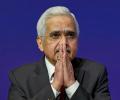
Outgoing Reserve Bank Governor Shaktikanta Das said on Tuesday that restoring inflation-growth balance is the most important task ahead of the central bank. Addressing a press conference on his last day as the central bank chief, Das said his successor will have to navigate the changing world order, effectively deal with cyber threats, and focus on harnessing new technologies.
The wholesale price-based inflation declined to over two-year low of 3.85 per cent in January on easing prices of manufactured items, fuel and power, even though food articles remained expensive. This is the ninth straight month of decline in the rate of wholesale price-index (WPI) based inflation. The WPI inflation was 4.73 per cent in January and 13.43 per cent in February, last year.

Retail inflation slowed to 4.29 per cent in April from 5.52 per cent in March, mainly due to easing food prices, government data showed on Wednesday. The Reserve Bank mainly factors in the retail inflation based on Consumer Price Index (CPI) while arriving at its monetary policy. As per the data released by Ministry of Statistics and Programme Implementation, inflation in the food basket was 2.02 per cent in April, down from 4.87 per cent in the preceding month.

Inflation in food articles during June stood at 2.04 per cent, as against 1.13 per cent in May.

Retail inflation dipped marginally to 6.44 per cent in February, mainly on account of a slight easing in prices of food and fuel items though it remained above the Reserve Bank's comfort level of 6 per cent for the second month in a row. As per the government data released on Monday, the Consumer Price Index (CPI)-based inflation was at 6.52 per cent in January and 6.07 per cent in February 2022. The retail inflation rate for the food basket worked out to be 5.95 per cent in February, marginally lower than 6 per cent in January.
In the urban areas, the CPI rose to 10.19 per cent during the month as compared to 10.10 per cent in July.

The RBI on Wednesday slashed key interest rate by 25 basis points, for the second time in a row, to support a shuttering economy hit by reciprocal tariffs imposed by the US. Following the rate cut, the key policy rate eased to 6 per cent providing relief to home, auto and corporate loan borrowers.

India on Tuesday set a minimum export price for onions of $300 per tonne to discourage overseas shipments amid an inflation scare that threatens to stoke public anger over rising prices at local food markets.

The policy review observed that the moderation in inflation, excluding food and fuel, that was witnessed in the first quarter of 2017-18 has "by and large, reversed".

Finance Minister Nirmala Sitharaman on Wednesday said the government is keeping an eye on inflation which is purely "extraneous" nowadays because of fuel and fertiliser prices. Replying to the debat on the Supplementary Demands for Grants in the Rajya Sabha, the minister said wholesale inflation has fallen to a 21-month low. Later, the Rajya Sabha returned the Supplementary Demands for Grants to the Lok Sabha, thus completing the process of authorising the government to spend an additional Rs 3.25 lakh crore in FY2022-23.

India's consumer price index (CPI)-based inflation could ease in the coming months thanks to the arrival of kharif crops, lower international commodity prices, and a pass through of lower input costs to consumers, the finance ministry said in its Monthly Economic Review (MER) for October, which was released on Thursday. The MER, however, warned that the global macroeconomic situation remained precarious and a recession in many advanced economies would impact India's exports. "Easing international commodity prices and new Kharif arrival are set to dampen inflationary pressures in the coming months.
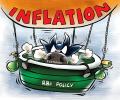
The Reserve Bank on Wednesday projected inflation to come down below the upper threshold level of 6 per cent by March quarter of the current fiscal. RBI Governor Shaktikanta Das said the central bank will keep 'Arjuna's eye' (focus) on the evolving inflation dynamics and will remain 'nimble and flexible' to deal with the price situation. Global commodity prices, including crude oil, have undergone some downward correction, but uncertainty continues to surround the near-term outlook in view of the prolonging geo-political hostilities. Moreover, the resurgence in domestic services sector activity could also lead to price increases, especially as firms pass on input costs.

For now, the upside appears to offset damage done to exports by weaker global demand.
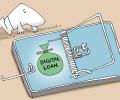
Union Finance Minister Nirmala Sitharaman's call for making lending rates affordable may not resonate anytime soon as banks still struggle with margin compression, and await clues from the Reserve Bank of India (RBI) on liquidity and rate action. Hinting that any lending rate cut was some time away, State Bank of India (SBI) managing director Vinay M Tonse said there was still some aggression in the market regarding deposit pricing.

In a significant policy announcement from the Oval Office, President Donald Trump has declared a 25 per cent tariff on all imported vehicles entering the United States, a move he described as "very exciting" for domestic manufacturing. The tariffs, set to take effect on April 2, will impact nearly half of all vehicles sold in the United States, including American brands assembled overseas.
Retail inflation declined to a 25-month low of 4.25 per cent in May mainly on account of softening prices of food and fuel items, with experts saying that RBI is expected to hold interest rates steady in the current fiscal. This is the fourth straight month when retail inflation has declined and the third straight month of Consumer Price Index (CPI) based inflation remaining within the RBI's comfort zone of below 6 per cent. CPI-based inflation stood at 4.7 per cent in April and 7.04 per cent in May 2022.
Retail inflation cut short its three-month declining trend and inched up to 7 per cent in August mainly due to higher food prices, according to official data released on Monday. The consumer price index (CPI) based inflation was 6.71 per cent in July and 5.3 per cent in August 2021. The CPI inflation has remained above the RBI's comfort level of 6 per cent for the eighth month in a row.

Updated new base years for national accounts and other macro-indicators are expected to come into effect from January-February 2026, coinciding with the first and second advance estimates of national income for FY26, senior official sources aware of the development told Business Standard. "The statistics ministry set up the Advisory Committee on National Accounts Statistics (ACNAS) earlier this week. "It will advise on the base year for GDP (gross domestic product) and its alignment with other macro-indicators.

India's consumer price inflation dropped to 5.4 per cent in June
 © 2026 Rediff.com - Advertise with us - Disclaimer - Privacy Policy - Sitemap - Feedback - About us - Terms of use - Grievances